
Transforming the Future: The GFF Investment Opportunity 2026–2030
Imagine a future where every woman and every young person can access the essential health care and nutrition they need to thrive and to fully participate in the global economy.
Investing in the health and nutrition of women, children, and adolescents saves lives AND is a high-yield economic strategy for poverty reduction, job creation, stability, and long-term prosperity. Healthy beginnings in pregnancy, early childhood, and adolescence enable young people to learn, work, and innovate — generating positive returns throughout their lives for their communities and countries.
The evidence for high return on investment is strong:
Core interventions in reproductive, maternal, newborn, child, and adolescent health and nutrition cost as little as US$1–US$2 per healthy year of life gained. A 10 percent increase in life expectancy at birth is associated with 0.4 percent higher GDP growth each year. Closing the women’s health gap represents a US$1 trillion economic opportunity.
The world has the tools to end preventable maternal and child deaths and transform countries’ health and economic outcomes, yet recent gains are at risk.
Weather shocks, rising debt, regional conflicts and the lingering economic effects of the COVID pandemic have forced the poorest nations to reduce their health spending below 2019 levels. Compounding these challenges, recent cuts of at least 20 percent or more in development assistance have begun unraveling the lifesaving health services that women and children rely on most. Without concerted action, by 2030 combined government and donor health spending is projected to further decline in over 80 percent of low-income countries and 40 percent of lower-middle-income countries (LMICs).
The imperative now is to prevent backsliding and accelerate access to affordable, quality health care at scale.
In 2024, the number of children dying before their fifth birthday rose for the first time this century to nearly 4.9 million children, including 2.3 million newborns — 9 deaths per minute. Every day, 700 women die from preventable causes related to pregnancy and childbirth, with approximately 90 percent of those deaths occurring in LMICs. The United Nations estimates 259 million women who want to avoid pregnancy cannot access modern family planning commodities. As LMICs confront a burgeoning youth population and a massive global gap of nearly 300 million jobs within the next decade, moving from successful pilot programs to sustainable, systemwide reforms that expand affordable access to essential health services will propel opportunity, growth, and resilience — with life-changing effects for the next generation.
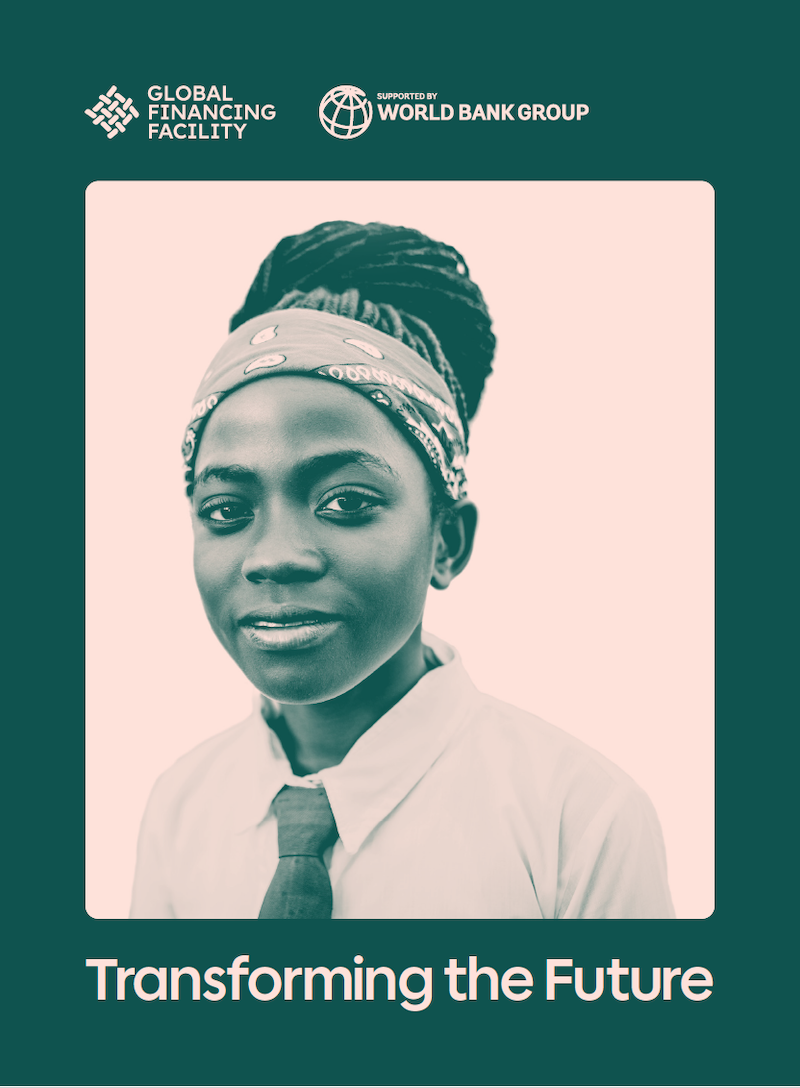
Investing in the Global Financing Facility (GFF) will accelerate the path to a world where no woman, child, or adolescent dies of preventable causes — and everyone can realize a healthier, more prosperous future.
As a country-led, catalytic platform hosted at the World Bank Group (WBG), the GFF is uniquely equipped to help partner countries tackle these challenges and accelerate progress, by mobilizing additional financing and prioritizing investments in the most cost-effective health interventions. By 2030, support from the GFF will enable partner countries to expand lifesaving care to hundreds of millions more women and children, build a future-fit workforce, and transform their health systems into sustainable engines of shared prosperity — ushering in a new paradigm for global health.
Investment Round Kick-Off Event
The GFF kicked off its 2026–30 investment round in April 2026, with US$806 million in new funding commitments from governments and philanthropic partners.
Read the press release and watch the event recap video below to discover how the GFF partnership is leading a movement to end the preventable deaths of mothers and children.

